
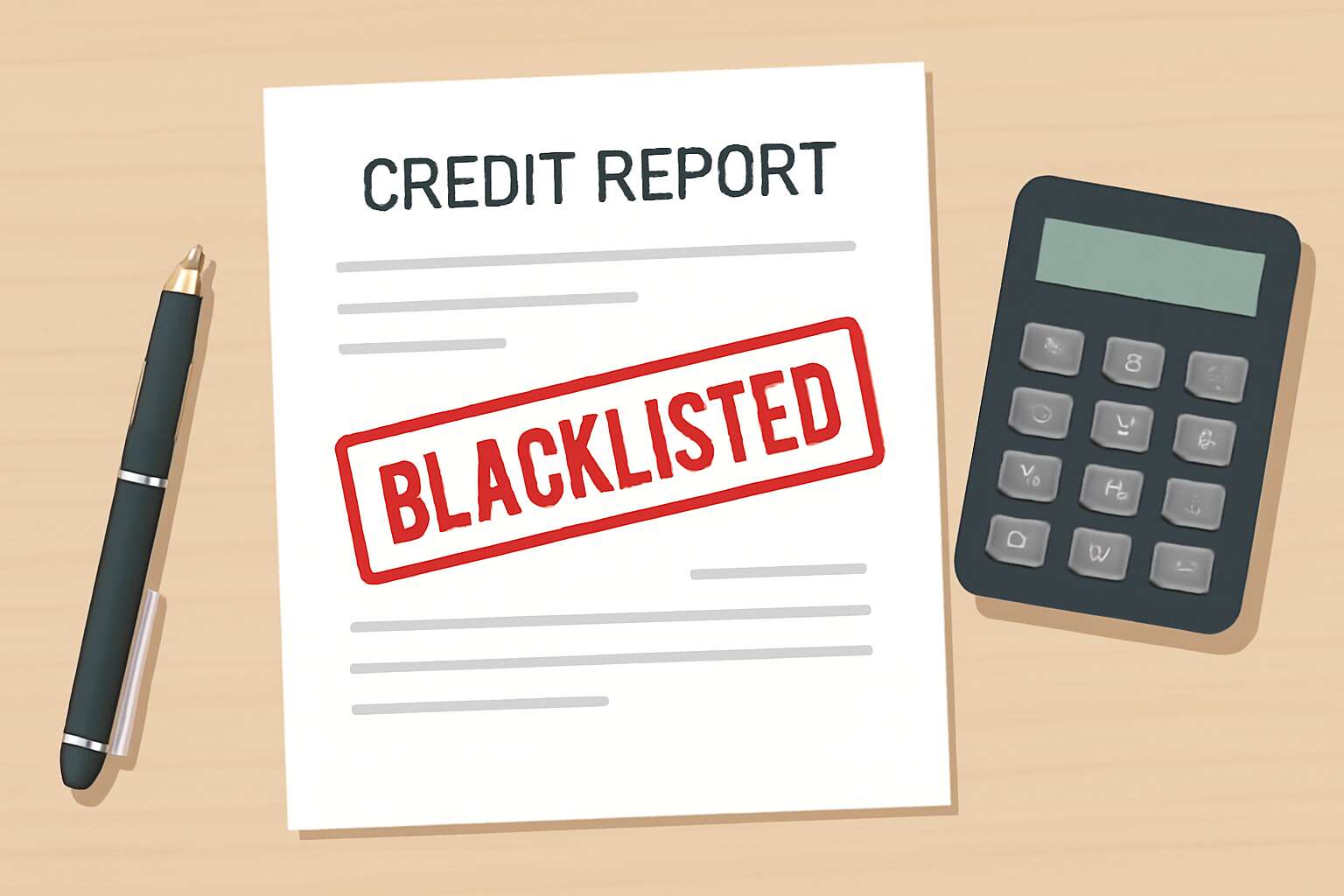
Understanding Lender Blacklists and Short-Term Lending
Signs of blacklist impact on access to credit
Credit gates swing shut with quiet inevitability. In South Africa, a single negative flag can shadow future borrowing. The idea that short term loans blacklisted becomes a quiet halo of doubt, nudging decisions and shaping perceptions about your financial landscape.
Signs of the blacklist’s grip are often subtle yet telling:
- slower approvals
- stricter income checks
- reduced loan amounts or longer wait times
For those navigating this terrain, the impact isn’t purely financial; it reshapes daily decisions, from budgeting to opening new accounts. It is a reminder that the story of credit lives in a ledger and in the nerves of the borrower alike.
Sources of blacklist data: credit bureaus, regulators, industry lists
Across South Africa, the ledger hums with a quiet gravity: a mention on your file can echo through every request. More than a handful of borrowers report that even seemingly routine applications stall when ‘short term loans blacklisted’ surfaces in the background. The psycho-social weight is tangible!
Understanding where those flags originate helps map the fog. The blacklists behind ‘short term loans blacklisted’ data draw from three core streams:
- Credit bureaus and data aggregators that compile histories
- Regulators maintaining watchlists and compliance registers
- Industry lists crafted by lender associations for risk screening
These feeds mingle numbers with narratives, creating a mosaic that lenders consult before deciding. The effect is not cold arithmetic alone; it is a human chorus in the background, guiding every inquiry with a whispered caution. This is the milieu in which ‘short term loans blacklisted’ data find their echoes.
Consequences for borrowers and loan eligibility
A harsh truth frames the SA lending horizon: a single flag on a file can shrink the window of opportunity. When the tag short term loans blacklisted appears, lenders move with quiet caution, and the path to a straightforward approval narrows in real time.
Each blacklist entry weighs on loan eligibility, timelines, and terms. The consequence isn’t just a denial; it reframes how credit is perceived and adds friction to the road back to finance.
- Stricter criteria and higher interest by default
- More verification, longer processing, and stricter checks
- Fewer product options and dampened lender enthusiasm
Ultimately, the ledger is not mere numbers but a mirror of risk, resilience, and the moral texture of borrowing.
How lenders use blacklist information in decision-making
In the dim glow of a South African desk, a single flag on a file can tilt fate. A hard truth sits in the quiet: credit decisions are shaped by past signals, not by wishful thinking. The ledger speaks in cold logic, and the heart has little sway.
Understanding how lenders use blacklist information reveals a fortress built from probability and caution. When the phrase short term loans blacklisted surfaces, the decision is weighted with renewed prudence; even familiar borrowers may walk through a narrower corridor of options.
- Risk scoring pivots on blacklists, sharpening the line between acceptance and denial
- Verification steps lengthen, as identity and repayment history are double-checked
- Product menus shrink, with tighter terms and fewer promotional offers
Yet the ledger remains more than numbers; it is a map of character under pressure, of resilience tested in the dark.
How to Identify if a Lender is Blacklisted or Flagged
Signs a lender might be on a blacklist
‘Trust is a fragile ledger,’ a veteran broker once confided, and in South Africa’s credit maze, the signs arrive like weather before a storm—soft, telling, and almost impossible to ignore.
To identify if a lender is blacklisted or flagged, note these telltale signals.
- Regulatory notices, sanctions, or cautions from oversight bodies
- Licensing status changes or suspensions from the National Credit Regulator (NCR)
- Spotty disclosures or unusually tight repayment terms that raise eyebrows
- Consistent pattern of customer disputes or sudden withdrawals from the market
In industry chatter, a lender described as short term loans blacklisted carries a warning that cuts through noise.
These signals guide discernment, not guarantee, shaping your reading of the credit landscape without dwelling on the reputational debris of the past.
Official registries and regulators to check
In the labyrinth of South Africa’s credit maze, regulators hold the compass. A veteran broker once whispered that when a lender earns a warning from the ledger, their name glows on the horizon—and not in your favor. That glow is visible in official chatter and public records. The label—short term loans blacklisted—drips with caution.
To peek behind the curtain, turn to official registries and regulators. The National Credit Regulator keeps licensing and discipline; the Credit Information Regulator guards how data moves among bureaus; sanctions or cautions pulse through those channels.
- National Credit Regulator (NCR) licensing status and disciplinary actions
- Credit Information Regulator (CIR) notices and bureau data
- Official sanctions or court actions tied to a lender
These signals frame judgment rather than define it.
Verifying lender legitimacy online
There’s a kind of quiet honesty in a market where regulators keep the score. If a lender is short term loans blacklisted, the warning glows in plain sight— public notices, licensing flags, and discipline records don’t lie. Verify a company’s credentials before you sign: check the NCR licensing status and peek at CIR notices; these official signals tend to outlive glossy ads and slick websites— that matters!
- Licensing status confirmed with the National Credit Regulator (NCR).
- Recent or ongoing Credit Information Regulator (CIR) notices or bureau data.
- Public sanctions or court actions tied to the lender.
Even with these signals, the landscape stays murky and the pressure to hurry never fully fades.
Steps to take if you suspect blacklist issues
Trust is earned in data, not in glossy ads. In South Africa’s murky lending lanes, a single regulator flag can spare your sleep. When a lender is short term loans blacklisted, the warning glows bright on licensing pages and court dockets, a quiet verdict you can’t ignore.
If you suspect a lender is blacklisted, follow these steps:
- Check the National Credit Regulator (NCR) licensing status for the company.
- Review any recent or ongoing CIR notices or bureau data tied to the lender.
- Search for public sanctions, regulator actions, or court rulings related to the lender.
- Ask for and retain written disclosures; compare terms against blacklisted indicators.
- Report discrepancies to the NCR or CIR if suspicious activity persists.
Good records and cautious escalation protect your credit health in a market where shadows linger but signals endure.
Risks and Costs of Using Blacklisted Lenders
Higher interest rates and hidden fees
In South Africa’s credit maze, the lure of quick cash can pull you toward short term loans blacklisted options that burn you later. These lenders operate outside mainstream protections, and the true cost climbs fast with higher interest rates and opaque charges. What starts as a lifeline can become a debt trap, leaving you juggling repayments while the debt shadows your days.
- Sky-high interest rates that compound and outpace any quick-fix offer
- Hidden fees—origination, service, and processing charges you weren’t warned about
- Rigid penalties for late payments and aggressive collections that taint your credit history
Ultimately, the gamble isn’t just money—it’s your financial future. The loan may end up costing more than you borrowed, and the records could haunt your credit for years.
Unfavorable loan terms and repayment pressures
“Lifeline or noose?” a seasoned counsellor whispered, and the refrain still haunts South Africa’s financial lanes. The lure of short term loans blacklisted promises instant relief, yet the price climbs fast when protections fade. These lenders operate outside mainstream safeguards, letting steep rates and opaque terms slip by unnoticed. What starts as a simple fix can become a burden you carry long after the cash is spent!
- Unpredictable fee structures that hide the true price until the debt arrives on your doorstep
- Heavy penalties and relentless collection tactics that stain your credit history
- Debt cycles from frequent renewals that keep you bound to the lender
Ultimately, the gamble isn’t merely about money—it’s about whether your future remains yours. It can cast a long shadow, reminding you that debts can outlive receipts and shape choices for years to come.
Common scams and predatory practices
Across South Africa’s lending lanes, a poor decision can echo long after the debt is spent. A quick fix from a shadowy storefront can feel like rescue, but the brief glow of relief often comes with steep costs. The lure of short term loans blacklisted promises speed, yet the price climbs fast as protections fade.
Common scams and predatory practices to watch for:
- Upfront fees or compulsory add-ons before any agreement is signed
- Hidden or escalating interest rates that surface only after renewal
- Aggressive collection tactics that threaten your credit history
Debt cycles trap borrowers in a perpetual squeeze, where tiny debts multiply into heavy burdens and the line between borrowing and pleading becomes dangerously thin.
Consumer protections and legal rights for borrowers
For borrowers, the specter of short term loans blacklisted hangs over every decision like a flickering neon sign. Quick cash can seem salvation, but the shadows demand more than repayment—they demand vigilance against opaque pricing and sudden penalties. The cost of speed is rarely in money alone; it’s measured in stress and time wasted chasing promises that vanish at renewal.
Consumer protections stand as a safety net. In South Africa, you’re entitled to clear terms, accurate information, and fair debt collection practices. If something feels off, you have rights to challenge entries, demand disclosure, and lodge complaints with regulators or the credit bureau.
- Right to clear, non-misleading contract terms
- Right to accurate information about your loan and costs
- Right to formal complaint channels and timely responses
Safer Short-Term Financing Alternatives and Pathways
Emergency funds and planning to reduce reliance on quick loans
Liquidity in South Africa moves faster than a taxi through traffic, and sudden expenses feel existential. “There are debts that buy time and debts that bind,” a sage economist notes, and the bind sharpens when short term loans blacklisted muddies the field.
Safer short-term financing alternatives exist, rooted in community and clarity instead of surprise fees. Consider these pathways:
- Credit unions and transparent lenders
- Community savings networks like stokvels
- Automatic savings to cushion future expenses
Emergency funds and planning act as quiet guardians, reducing the lure of quick fixes. A modest savings mindset softens the shock of a sudden bill; when short term loans blacklisted, temptation wanes and preparation speaks with calmer authority.
Legitimate lenders: credit unions, banks, reputable online lenders
In South Africa, emergencies knock when the streetlights flicker, and fear is a heavier debt than interest. “There are debts that buy time and debts that bind,” a sage economist notes, and the path through the darkness is lit by transparency. When short term loans blacklisted clouds the horizon, safer financing glows as a lantern rather than a trap.
Legitimate lenders—credit unions, banks, and reputable online lenders—offer clear terms, predictable repayment schedules, and fee structures you can read in the moonlight. Community savings networks like stokvels provide communal stewardship for modest needs. Automatic savings to cushion future expenses acts as a quiet shield that grows with every paycheck.
- Credit unions and transparent lenders
- Community savings networks like stokvels
- Automatic savings to cushion future expenses
Government assistance programs and nonprofit options
South Africa’s households often face sudden expenses that demand quick thinking and careful budgeting. When money is tight, the wrong choice can turn a speed bump into a roadblock, stalling plans for months ahead.
Safer Short-Term Financing Alternatives and Pathways Government assistance programs and nonprofit options invite borrowers to step back from the shadows of short term loans blacklisted, these options emphasize transparent terms, fixed costs, and repayment clarity.
- Government assistance programs offering emergency grants and subsidies
- Nonprofit organizations providing microloans with clear terms
- Community savings circles that pool funds for short-term needs
Beyond formal channels, a public-private tapestry cushions the crunch without predatory fees and opaque conditions.
Longer-term resilience rests in planning, disciplined saving, and supportive networks that keep futures intact.
Debt management and consolidation strategies for small loans
The night trembles with the echo of unpaid bills. In South Africa, the fear of being labeled short term loans blacklisted darkens choices, but safer pathways glimmer—transparent terms, fixed costs, and repayment plans you can read as if by lantern light.
Debt management and consolidation offer a measured corridor through the shadowed market. They emphasize reducing exposure to high-interest cycles and protecting future borrowing power.
- Fixed-rate products with clear terms
- Consolidation through reputable lenders
- Credit-building options that avoid new penalties
Beyond formal channels, community savings circles and nonprofit options provide softer light, while planning and disciplined saving stitch a longer, safer fate.
Repairing Credit and Rebuilding Access After Blacklist Issues
Disputing inaccurate blacklist entries and correcting credit reports
One misfiled entry can shadow a life’s horizon for years, and in South Africa, the road back to responsible credit starts with the ledger. Repairing credit is a lyric of patience and consistent reliability, not a feverish rush to borrow again.
- Rights to access official reports from credit bureaus
- Documentation of correspondence and preserved evidence
- Evidence of steady, responsible financial behavior
Disputing inaccurate blacklist entries and correcting credit reports are acts of reclamation. When a record finally aligns with truth, a borrower gains renewed access to formal lenders, and life’s possibilities brighten. If you’ve known the sting of short term loans blacklisted, you learn to measure every financial gesture, to maintain records, and to seek legitimacy over expedience.
Strategies to improve credit scores over time
“Credit is the quiet map of trust,” a seasoned lender once whispered, and in South Africa the map often clears only after weathering the storm of past missteps!
Repairing credit after blacklisting is a saga of patience, not panic. When the ledger finally aligns with truth, formal lenders return to the door, and life’s possibilities brighten. If you’ve known the sting of short term loans blacklisted, you learn to meter every gesture, preserve evidence, and let reliability gradually redraw the horizon.
Along the journey, consider these quiet pillars:
- Documentation and preserved correspondence
- Regular checks of credit reports to catch errors
- Consistent, prudent financial behavior that signals trust
Over time, the glow returns, and access to formal finance becomes less a rarity and more a rhythm.
Negotiating with lenders and settlements after issues
Repairing credit after blacklist marks is a patient game, and the payoff is real. In South Africa, a sizable share of borrowers who actively negotiate and pursue settlements regain formal credit within 18 to 24 months. If you’ve known the sting of short term loans blacklisted, you learn to treat every contact with lenders as a chance to rebuild trust and set a sturdier path forward.
Here are practical steps to negotiate and settle matters after issues:
- Prepare a clear repayment proposal with a realistic timeline
- Offer a structured payment plan or a lump-sum settlement
- Document all communications and request written acceptance
- Consider professional advice from a credit counselor or attorney
Keep records, stay consistent, and push for written confirmations. With disciplined negotiation, the horizon where access to formal finance becomes routine again starts to widen; short term loans blacklisted no longer defines your financial story.
Long-term credit monitoring and prevention strategies
South Africa’s financial landscape rewards patience; the payoff is real when you commit to long-term credit monitoring. If you’ve known the sting of short term loans blacklisted, this is the path back to formal credit, not a flash-in-the-pan fix. Within 18 to 24 months, many borrowers see the door reopen. ‘Patience pays,’ a veteran lender quips.
Long-term monitoring and prevention strategies keep you from slipping back into the same trap. Consider the following high-level approaches:
- Consistent financial behavior over time
- Awareness of data quality in credit files
- Engagement with reputable lenders and regulators
Ultimately, the aim is to turn blacklist history into a chapter of proven reliability, where careful data handling and steady repayments pave the way for renewed access.



0 Comments